

Healthcare private equity is emerging as one of the most resilient and opportunity-rich investment themes in 2025. Rising healthcare demand, aging populations, digital health adoption, and structural reforms are driving sustained investor interest across both the United States and India.
For family-owned and founder-led healthcare businesses, private equity is no longer just about capital. It is increasingly about scaling responsibly, professionalizing operations, and planning succession—without losing clinical values, reputation, or control.
This guide explains how healthcare private equity works in India and the USA, why it is accelerating in 2025, and what family healthcare businesses should prepare for before partnering with PE investors.
Why Healthcare Attracts Private Equity in 2025
Healthcare stands apart from most sectors due to its stability and long-term demand fundamentals. Private equity firms continue to allocate capital to healthcare even during economic slowdowns.
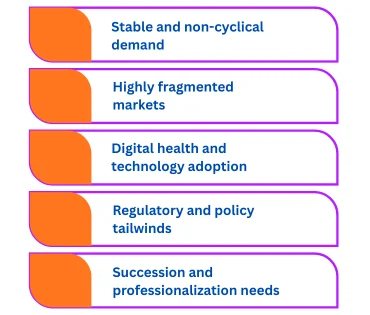
Key Drivers of Healthcare Private Equity Growth
- Stable and non-cyclical demand
Hospitals, diagnostics, outpatient clinics, and senior care benefit from consistent patient volumes, regardless of economic cycles.
- Highly fragmented markets
Both India and the USA have thousands of mid-sized, family-run healthcare providers—ideal for consolidation and platform-building strategies.
- Digital health and technology adoption
Investments in telemedicine, AI-driven diagnostics, electronic health records (EHRs), and revenue cycle management require capital beyond what many family businesses can self-fund.
- Regulatory and policy tailwinds
- USA: Shift toward value-based care and outcome-driven reimbursement models
- India: Expansion of insurance coverage, Ayushman Bharat, and rising healthcare affordability
- Succession and professionalization needs
Many healthcare families face generational transitions, creating an opportunity for PE-backed governance and leadership continuity.
Healthcare Private Equity in the USA: Scaling Beyond Legacy Operations
In the United States, private equity has become deeply embedded in healthcare services, particularly in outpatient and specialty care.
Common PE Deal Structures in the USA
- Buy-and-build platforms in:
- Outpatient surgery centers
- Dental and veterinary clinics
- Behavioral and mental health services
- Diagnostics and imaging chains
- Majority recapitalizations
Founders retain meaningful equity while PE firms provide growth capital and lead M&A expansion.
Value Creation Levers in US Healthcare PE Deals
- Transition from fee-for-service to value-based care contracts
- Centralizing billing, scheduling, and procurement
- AI-enabled patient engagement and capacity optimization
- Recruiting professional CEOs and CFOs while keeping physicians as equity partners
Cultural Sensitivity in US Deals
Patient trust and physician autonomy remain critical. Family-led providers typically prefer PE partners who:
- Respect clinical independence
- Avoid aggressive cost-cutting that impacts care quality
- Protect long-standing brand reputation in local communities
Healthcare Private Equity in India: Growth Capital with Governance Focus
India’s healthcare sector is growing rapidly, yet remains largely family-owned and underpenetrated relative to population needs.
Typical Private Equity Deals in Indian Healthcare
- Minority growth equity (10–49%)
Used for hospital expansion, diagnostic networks, specialty clinics, and digital health platforms. - Strategic partnerships
Global healthcare and PE funds are bringing international best practices, technology, and clinical processes.
Key Value Creation Drivers in India
- Expanding into Tier-2 and Tier-3 cities
- Scaling diagnostics, pathology labs, and day-care procedures
- Implementing hospital information systems (HIS) and digital health records
- Improving pricing discipline and capacity utilization
Governance and Control Considerations
Indian family promoters are cautious about dilution and control. Well-structured deals often include:
- Reserved matters and affirmative voting rights
- Promoter-led board representation
- Clear non-interference clauses in clinical decisions
- Defined exit mechanisms without forced control loss
These structures help align PE growth objectives with promoter values.
Healthcare Segments Most Attractive to Private Equity in 2025
Private equity interest is increasingly focused on scalable, asset-light, and repeatable healthcare models.
High-Interest Healthcare Subsegments
- Diagnostic and pathology chains
- Outpatient and day-care surgery centers
- Mental health and behavioral care platforms
- Elder care and assisted living facilities
- Digital-first healthcare delivery platforms
These segments offer predictable cash flows, operational leverage, and clear expansion pathways.
Where Private Equity Adds the Most Value in Healthcare
Private equity’s role extends well beyond funding.
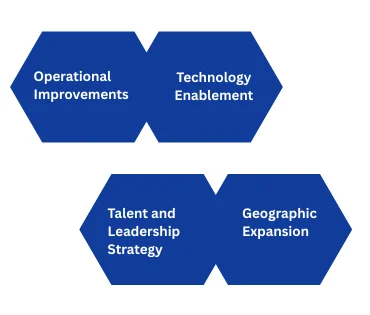
Operational Improvements
- Standardized procurement of medical supplies
- Revenue cycle optimization and billing efficiency
- Better cost visibility without compromising patient outcomes
Technology Enablement
- EHR and hospital information systems
- AI-assisted imaging and diagnostics
- Patient engagement platforms and telehealth integration
Talent and Leadership Strategy
- Hiring professional management teams
- Structuring incentives for doctors and senior clinicians
- Grooming next-generation family leadership
Geographic Expansion
- Funding greenfield hospitals and clinics
- Acquiring regional players to build scale
- Replicating proven operating models across locations
Valuation and Exit Considerations in Healthcare PE Deals
Healthcare valuations depend heavily on operational discipline and scalability.
Key Valuation Drivers
- Clean separation of promoter compensation from EBITDA
- Consistent margins and payer mix
- Strong compliance and accreditation (NABH, JCI, CMS)
- Scalable outpatient and diagnostics revenue
Common Exit Routes
- Secondary sale to larger PE funds
- Strategic sale to hospital networks or healthcare corporates
- IPOs, particularly for large Indian healthcare platforms
Key Risks in Healthcare Private Equity Partnerships
Despite strong fundamentals, healthcare PE investments carry unique risks.
Risks to Manage Carefully
- Excessive leverage in low-margin assets
- Cultural friction between financial and clinical priorities
- Regulatory changes in pricing and reimbursements
- Data privacy and AI-related clinical liability
- Doctor attrition after PE entry
Proactive governance and alignment reduce these risks significantly.
Practical Preparation Roadmaps
For US Family-Owned Healthcare Businesses ($30M–$200M Revenue) Approximately
- Conduct quality-of-earnings analysis
- Build an independent, healthcare-focused board
- Identify regional acquisition clusters
- Upgrade digital infrastructure before fundraising
- Consider majority recapitalizations with equity rollover
For Indian Family-Owned Healthcare Businesses (₹200–₹2,000 Cr Revenue) Approximately
- Strengthen MIS, audits, and compliance systems
- Map expansion into underserved regions
- Prepare a detailed capex and technology roadmap
- Choose healthcare-specialist PE investors
- Structure minority deals that preserve promoter control
Conclusion: The Future of Healthcare Private Equity in India and the USA
In 2025, healthcare private equity is no longer just financial capital—it is transformational capital.
For US healthcare families, PE enables consolidation, technology adoption, and succession planning.
For Indian healthcare promoters, it supports rapid expansion, governance maturity, and institutional credibility.
When structured thoughtfully, healthcare private equity partnerships can convert family-led healthcare businesses into scalable, resilient, and future-ready institutions—without compromising patient care or legacy.