

For many business owners, the dream is to grow their company into a market leader, expand operations, and achieve long-term sustainability. But growth isn’t always straightforward limited capital, lack of strategic direction, and operational bottlenecks can hold back even the most promising businesses.
When traditional financing options like bank loans or personal investment are no longer enough, Private Equity (PE) emerges as a powerful alternative to unlock growth potential.
Why Consider Private Equity?
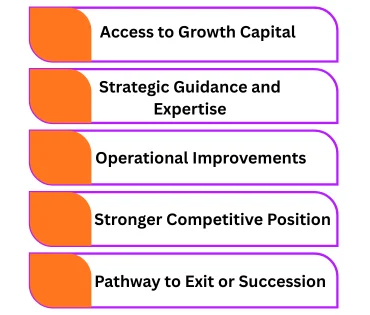
Private equity firms invest directly in businesses, usually in exchange for a significant equity stake. Unlike traditional lenders, PE firms don’t just provide capital they bring expertise, networks, and resources to help companies grow. Here’s why this can be a game-changer for businesses struggling to scale:
1. Access to Growth Capital
Scaling requires investment whether it’s for hiring, expanding facilities, upgrading technology, or entering new markets. PE firms provide substantial funding that can be used for these growth initiatives without burdening the business with high-interest debt.
2. Strategic Guidance and Expertise
Private equity firms often have seasoned professionals who specialize in building operational efficiency, improving profitability, and identifying expansion opportunities. Their involvement can help business owners focus on their core strengths while leveraging expert advice for strategic decisions.
3. Operational Improvements
PE firms don’t just inject money; they often work hands-on to optimize processes, streamline supply chains, improve marketing strategies, and modernize management structures enabling businesses to scale sustainably.
4. Stronger Competitive Position
With fresh capital and professional oversight, companies can move faster than competitors, invest in innovation, and capture greater market share something that might not be possible with limited internal resources.
5. Pathway to Exit or Succession
For founders who eventually want to exit or reduce their involvement, private equity can be an excellent transition option. PE firms can prepare the company for a future sale, IPO, or management buyout, ensuring the business continues to thrive even after the founder steps back.
Is Private Equity Right for Your Business?
Private equity is not a one-size-fits-all solution. It typically works best for:
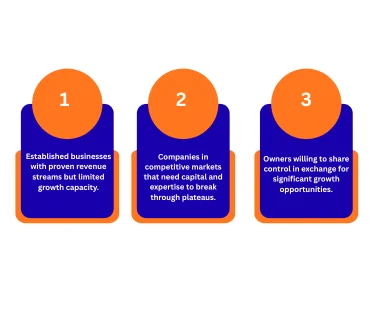
- Established businesses with proven revenue streams but limited growth capacity.
- Companies in competitive markets that need capital and expertise to break through plateaus.
- Owners willing to share control in exchange for significant growth opportunities.
If your business has strong fundamentals but is struggling to grow beyond a certain point, exploring a private equity partnership can provide the capital, expertise, and strategic support you need to scale effectively.