

Private equity refers to investment capital provided to private companies in exchange for equity, with the aim of driving growth, improving efficiency, and eventually realizing a return through an exit. In the family business space, private equity is increasingly seen as both an opportunity and a challenge, especially as these enterprises navigate generational change and social enterprise (socent) goals.
Why Family Businesses Attract Private Equity
1. Succession Pressures
Many family-led businesses face leadership transitions as founders retire. Research shows only 30% survive into the second generation and just 12% reach the third. This creates opportunities for private equity to step in with continuity solutions.
2. Strong Cultural Assets
Long-term customer loyalty, brand equity, and community trust are core strengths that make family businesses appealing to private equity investors.
3. Untapped Growth Potential
Private equity sees expansion opportunities where family owners may be cautious—whether in adopting new technologies, entering new markets, or modernizing operations.
How Private Equity Benefits Family Businesses
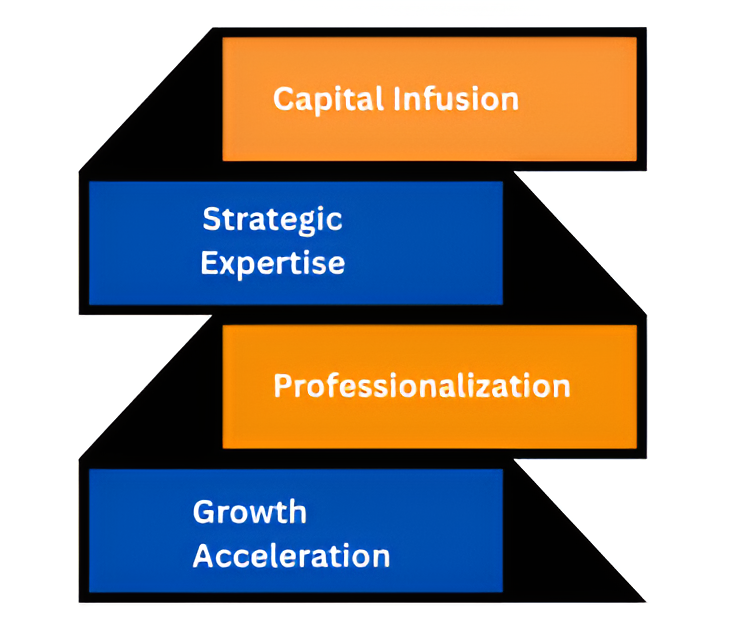
Capital Infusion
Private equity provides funds for expansion, acquisitions, or technology upgrades that might be otherwise out of reach.
Strategic Expertise
Investors bring seasoned management practices, governance frameworks, and access to broader industry networks.
Professionalization
Private equity partnerships often introduce structured decision-making, measurable performance indicators, and scalable processes.
Growth Acceleration
By applying operational discipline and strategic planning, private equity can push family businesses into higher growth trajectories.
Risks and Challenges of Private Equity Involvement
Cultural and Vision Misalignment
Private equity’s shorter investment horizon (5–7 years) can conflict with a family’s desire to preserve legacy and long-term impact.
Control Tensions
Demands for board representation or veto rights can dilute family decision-making authority.
Short-Term Profit Focus
In some cases, pressure to maximize returns can compromise innovation, quality, or social commitments.
Operational Strain
Aggressive restructuring or high leverage can lead to instability—sometimes resulting in closures and job losses.
The Private Equity–Socent Connection
For social enterprises, private equity can be a catalyst for scalable impact—if mission alignment is maintained. This requires:
- Structuring deals that allow founders to retain equity or leadership roles.
- Building governance frameworks that include both financial and social performance metrics.
- Considering phased or minority-stake investments to balance liquidity and legacy.
Key Takeaways
| Opportunity | Risk |
| Access to growth capital | Potential loss of cultural identity |
| Professional governance | Pressure for short-term gains |
| Expanded market reach | Mission drift |
| Scale impact goals | Job losses or community disruption |
Conclusion
In the evolving landscape of social enterprises and family-led companies, private equity can be both an enabler and a disruptor. Success lies in structuring partnerships that safeguard mission, respect legacy, and blend financial performance with long-term value creation.